Sept. 22, 2026 | By Staff Sgt. Noah Coger, Armed Forces Medical Examiner System




Sept. 22, 2026 | By Staff Sgt. Noah Coger, Armed Forces Medical Examiner System
“I have always felt like I do my best work when the stakes are the highest.”
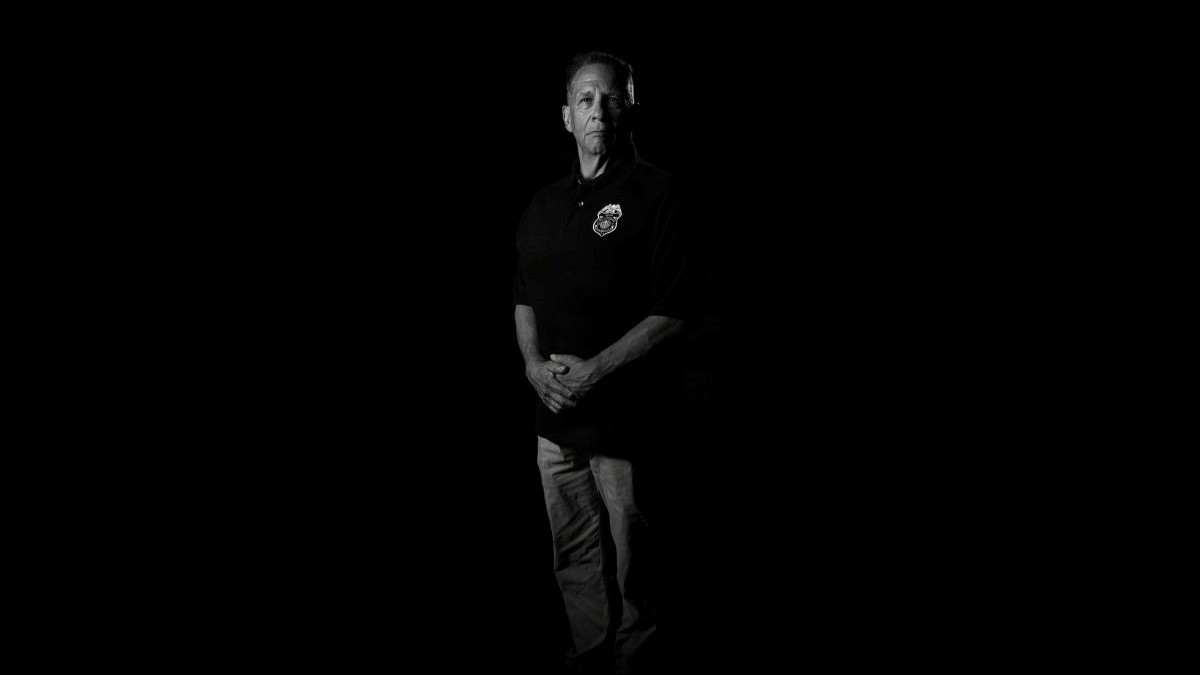
Born in Baltimore and raised in York County, Pennsylvania, Wayne Hopkins, an Armed Forces Medical Examiner System medicolegal death investigator, has built his life and career through service. “I’ve always had a strong desire to help people,” said Hopkins. “All of the jobs that I have held throughout my life have been in service to others.”
For Wayne, that service started at home during his final years of high school. Wayne’s father fell seriously ill, leaving Wayne to make a decision that most kids his age did not have to make. “I had to look at how I could support my family financially,” said Hopkins. “Continuing my education after high school was not my priority; supporting my family was.”
Fortunately, Wayne knew from a very young age what he wanted to do in life; he wanted to follow in his father’s footsteps as a firefighter. He became a junior firefighter at the age of 14, in Red Lion, Pennsylvania, where he spent most of his days cleaning trucks, rolling hoses, and making coffee at the local fire house. From those formative years, his passion for emergency services and serving his community continued to grow, and over the next two decades, he would go on to become a firefighter, engineer, an EMT and ultimately president of his fire company.
Because life required him to prioritize work instead of pursuing education, Wayne built his career through experience. “I’ve always found that success in life is not determined by where you went to school or what degree you have,” said Hopkins. “Success is determined through the goals that you set for yourself and how you achieve them, whether that is through schooling or through hard work and experience.”
That experience he gained in emergency services would prove invaluable when a back injury forced him to consider what would be next. He quickly found his way to managing a team at a Fortune 100 insurance company where he spent the next 18 years gaining and honing additional skills, before eventually earning an early retirement package. But Wayne’s passion for serving led him back to his roots in emergency services. Earning his EMT certification, he returned to the Lehigh Valley area of Pennsylvania where he began to interact more frequently with death investigators. Seeing their work firsthand, he began to admire what they did.
“I saw how they would interact with the families specifically,” said Hopkins. “These families had just lost somebody they cared about, and they were looking for answers. The death investigator was able to provide them with information, give them peace of mind, and help them through the next steps.”
Wayne realized that he wanted to be that person for others. He decided to attend a course in St. Louis and quickly landed a role at the local coroner’s office as a death investigator. This role eventually steered him to AFMES, where decades of experience came together. “Emergency services taught me how to respond in emergency situations, and how to manage people in crisis,” said Hopkins. “Dispatching taught me how to communicate and allocate resources, and managing an insurance sales team taught me how to listen and lead people. Skills that are all necessary for this job at AFMES.”
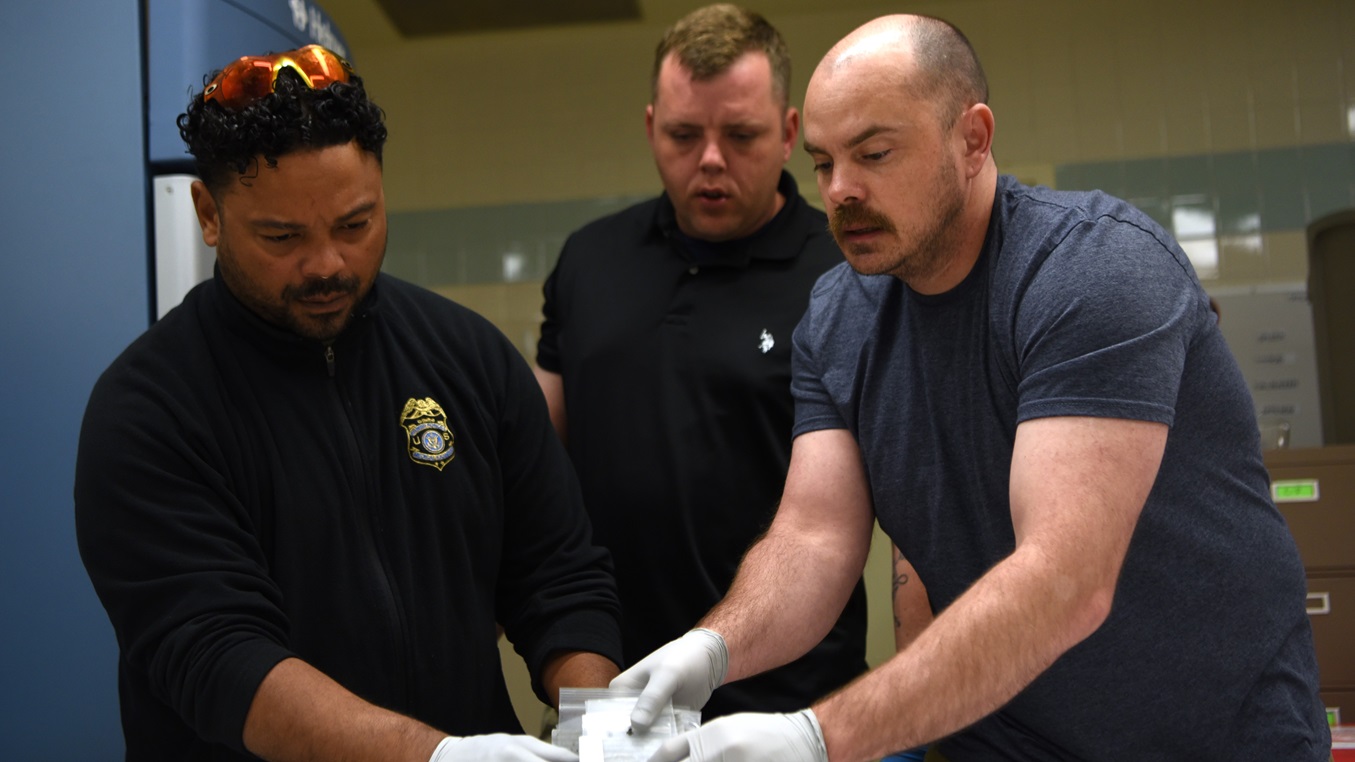
Now, as a medicolegal death investigator with AFMES, Wayne serves as the first point of contact for each of the Military Criminal Investigative Organizations, when a death has occurred under exclusive federal jurisdiction. As one of six MDIs, he handles cases around the globe, 24/7, gathering critical information and coordinating responses, whenever a call comes in. MDIs handle everything from arranging transportation of remains, coordinating with the MCIOs, assembling the team, conducting independent investigations, assisting with autopsies, documenting evidence and personal property, as well as working with families to provide guidance.
Despite the heavy demands of travel and logistics, Wayne sees the job as serving those that are still here. “I believe the role of MDI is just as much for those that are still here as it is for those who are not,” explained Hopkins. “We are there to provide the families with knowledge and comfort.”
For Wayne, his motivation remains the same as it was when he first started as a young junior firefighter, helping those that are in need. “Like I said, every job that I have held has been in service to others,” said Hopkins. “Now, I get to serve the families of those that I hold in the highest regard, the families of our nation’s military members.”
Looking back on his life and career path, Wayne says that he is grateful for the challenges and opportunities that have made him who he is today. “I strongly believe that every job I have had and every person that I have worked with have helped prepare me for my position as an MDI here at AFMES,” said Hopkins. “I can honestly say there hasn’t been a single day that I did not look forward to coming to work. I love what I do, I love the people that I work with and those that I serve.”