March 16, 2026 | By T. T. Parish, Operational Medical Systems


March 16, 2026 | By T. T. Parish, Operational Medical Systems
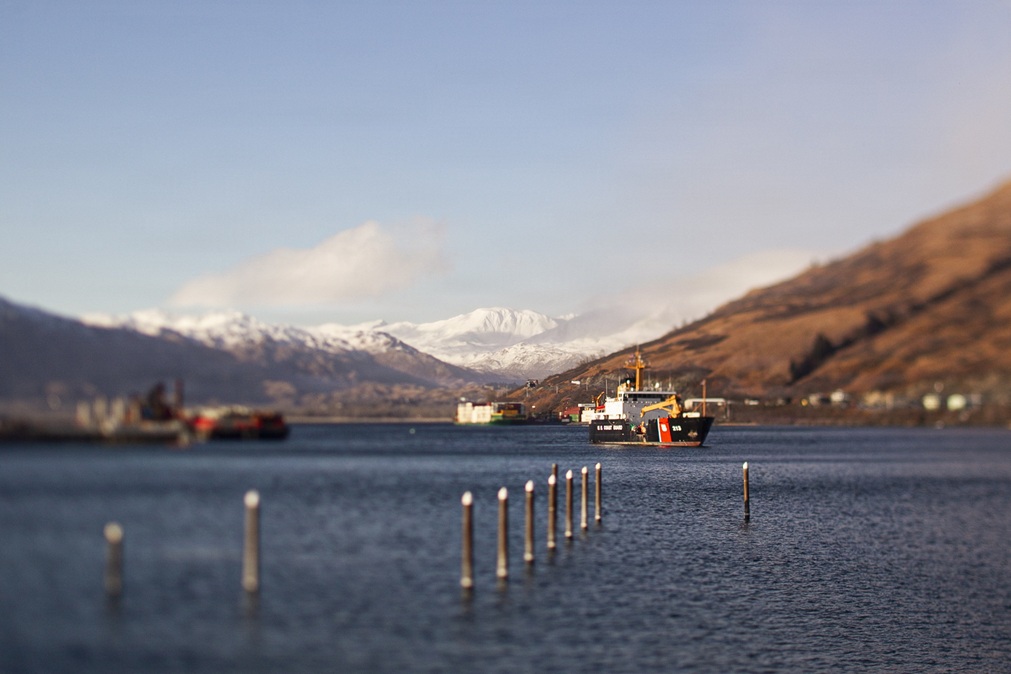
Five miles out to sea in Chiniak Bay, Alaska, the bright winter sun reflects off the uncommonly calm, blue-gray water. Aboard the NOAA ship Oscar Dyson (R-224), the hum of diesel engines is joined by the approaching thwat-thwat-thwat of a U.S. Coast Guard MH-60T Jayhawk helicopter. On the ship’s aft deck, U.S. Air Force and Army medics work with the ship’s crew, readying a notional casualty for the first joint service, multi-agency ship-to-shore medevac exercise ever conducted in the Arctic.
As the Jayhawk pulls into a hover, a rescue diver emerges, skillfully landing on the sea-sprayed deck. After a quick assessment with the medics, the team carries the litter to the center of the deck. The diver secures the hoist line, gives a thumbs-up, and the casualty is lifted skyward. The entire operation is a display of precision, completed in under 10 minutes.
This drill was just one of dozens of scenarios performed during exercise Arctic Edge 2026 (AE26), a U.S. Northern Command-led effort to prepare for operations in extreme cold-weather environments. From February 23 to March 13, 2026, Arctic Edge brought together multiple military, state, and federal agencies around Kodiak and Fort Greely, Alaska.
During the medical experimentation portion of AE26, the combined efforts of more than 50 medical experts helped to shape the future of combat trauma care in an Arctic environment. And for the Defense Health Agency’s Operational Medical Systems team, the exercise was a critical opportunity to collect user feedback on two developmental medical products in near-real-world conditions.
The first is a handheld digital assessment device for burns. Far from a hospital, this tool is designed to give frontline medics an objective read on a burn’s severity, helping them make life-saving treatment decisions at the point of injury. The second is canine freeze-dried plasma. Military Working Dogs are vital assets, and this shelf-stable plasma can be used to treat wounded MWDs in the field.
“When warfighters are wounded or injured in the Arctic, they’re fighting the enemy and the elements simultaneously,” said OPMED’s program manager, U.S. Army Col. Owen Roberts. “Arctic Edge allowed us to test medical solutions that can give our troops the decisive advantage to survive and win in those extreme conditions, ensuring combatant commands are ready for the fight.”
OPMED product managers Amy Wingerd and U.S. Army Lt. Col. Sheila Johnson were on-site during AE26, training users on product set-up, administration, and interpretation before the tools were used in medical scenarios. Gathering this hands-on feedback is a primary goal for OPMED, as it helps the team refine products to meet the needs of the warfighter.
“We rely on partner engagement opportunities like Arctic Edge to help us gather objective data on our products,” said Johnson, who manages the canine FDP program. “Partnering with frontline medics and care providers allows us to tailor our approach as we develop devices and products to fill urgent capability gaps that have been identified by the joint services and combatant commands.”
“Exercises like Arctic Edge give our team unmatched access to the warfighters who are the end users of the products we develop,” said Roberts. “Their feedback is vital to helping us improve those products for far-forward use.
“In the end, what matters most is meeting the needs of the medics, corpsmen, and medical officers who train to save the lives of our service members. Supporting theater-wide, joint service events gives OPMED and DHA an added edge as we enhance our direct support capabilities for future conflicts.”